


Asahi no Yashiro
A Shrine with Exquisite Carvings
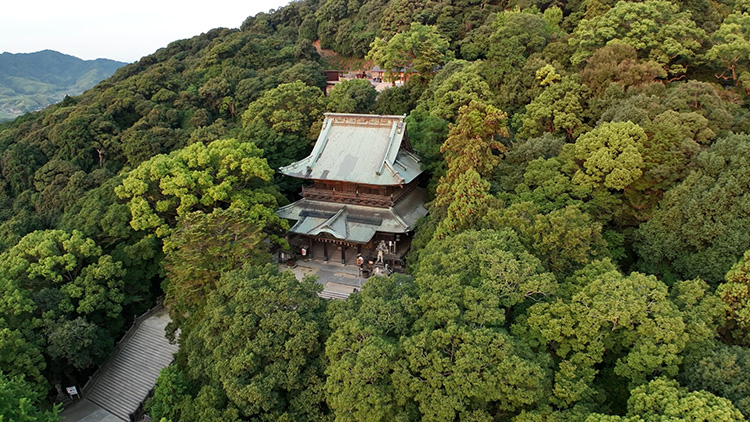
Asahi no Yashiro is one of the largest wooden shrine buildings on the island of Shikoku. Also known as “Asahi-sha,” this subsidiary shrine was built in 1845 on the grounds of the famed Kotohiragū Shrine, in Kagawa Prefecture. The building was funded by 138,000 donors from across the country.
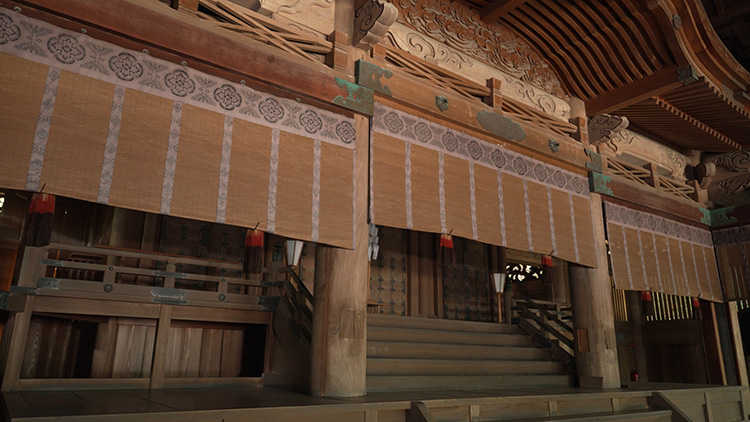
The shrine building stands 25 meters tall. The airy main chamber and curved roofs display a style drawn from Chinese Buddhist architecture. In fact, Asahi-sha was originally built to enshrine the Buddhist deity of healing and medicine, but in the late nineteenth century it was converted to a Shinto shrine. It now enshrines many deities, including Ame-no-Minakanushi, who is considered one of the oldest in the Shinto pantheon.
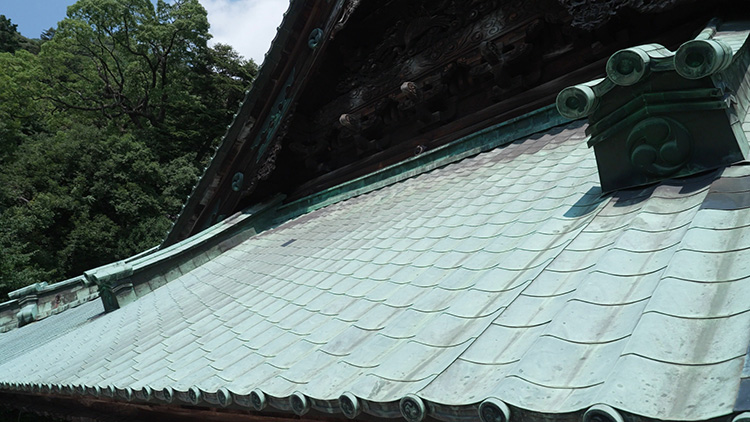
The builders intended to roof Asahi-sha with ceramic tiles, but because they would have been too heavy, it is instead covered with roughly 10,000 lightweight copper plates. Each one was shaped by hand to resemble a tile.
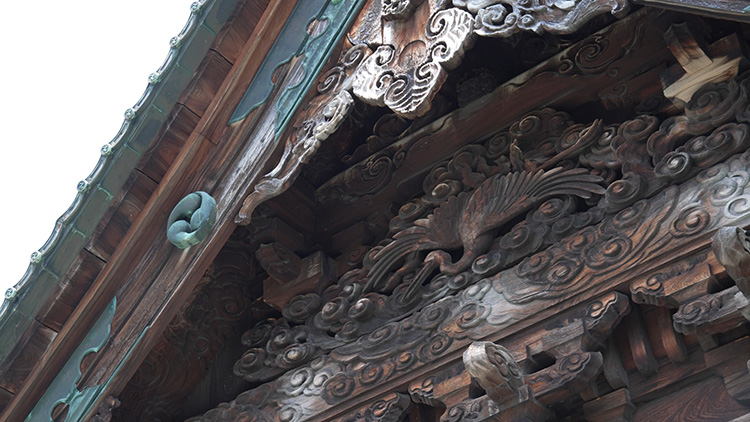
Nearly every wooden surface of the building is ornately carved. The flat surfaces beneath the overhanging eaves are textured with whirling clouds, while carvings of dragons and other creatures extend from the tail rafters, and fish swim across the side panels. Animals associated with water were often added to wooden structures like these as talismans against fire. There are also auspicious symbols in the top gables. A crane is carved on one gable, a turtle on the other. Both animals are symbols of longevity.
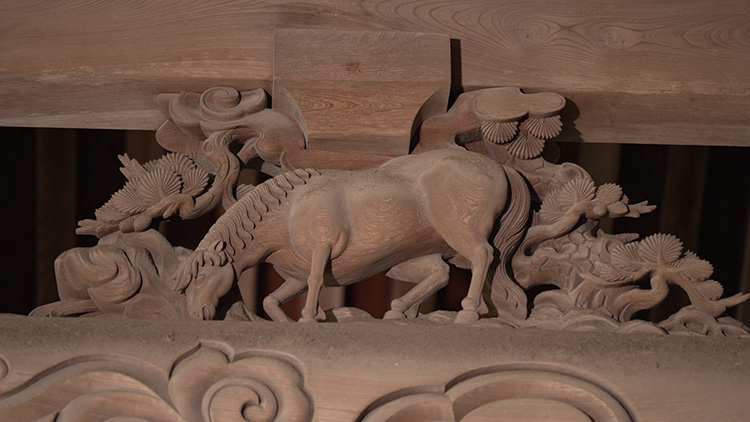
The paneled doors are carved with images of Daoist immortals in harmony with nature. Such figures were often included in religious architecture as inspiring examples of immortal powers beyond human understanding. Here, the master carvers made reliefs with openwork, creating apertures that allow the passage of air and light. Inside the hall, they carved animals of the Chinese zodiac between the horizontal beams that surround the main chamber. The animals face the interior, as if to observe visitors as they enter.
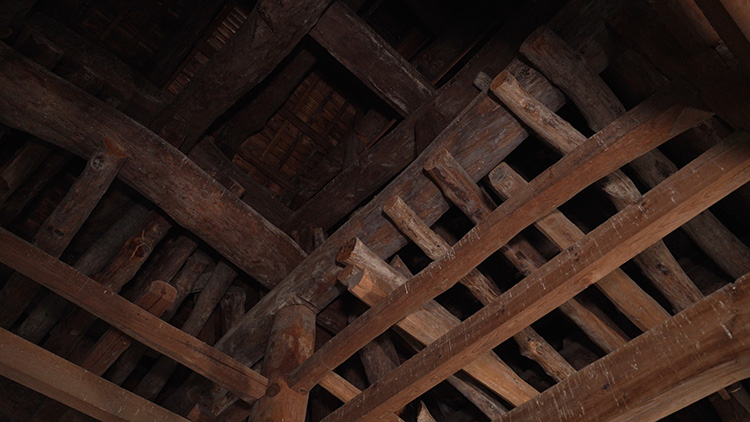
The shrine’s elaborate construction used more than 100 huge zelkova-wood beams from faraway Akita Prefecture. The massive weight of the multistory building is supported with a clever cantilevering system that is concealed in the upper floors. This allows the central prayer space to be lofty and open, with no central columns standing between the pilgrims and the enshrined deities.
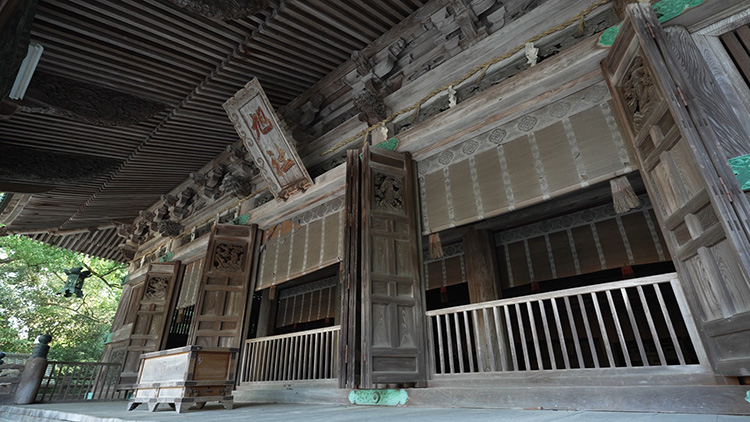
Asahi-sha was designated an Important Cultural Property of Japan in 1982, and Kotohiragū is committed to preserving its remarkable architecture and carvings. Nearly two centuries have taken their toll on the building, so an ambitious 18-year restoration project is currently underway to repair damage from termites and moisture.
Links


令和7年度文化財多言語解説整備事業