


Kanamaruza
Japan’s Oldest Remaining Kabuki Theater
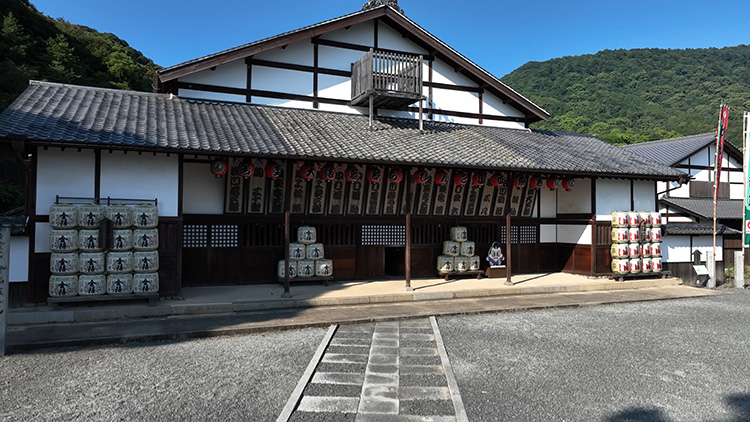
Kyū Konpira Ōshibai, known locally as “Kanamaruza,” is a historic kabuki theater near Kotohiragū Shrine, in Kagawa Prefecture. Built in 1835, Kanamaruza is the oldest surviving kabuki theater in Japan, and it is still used to stage major productions.
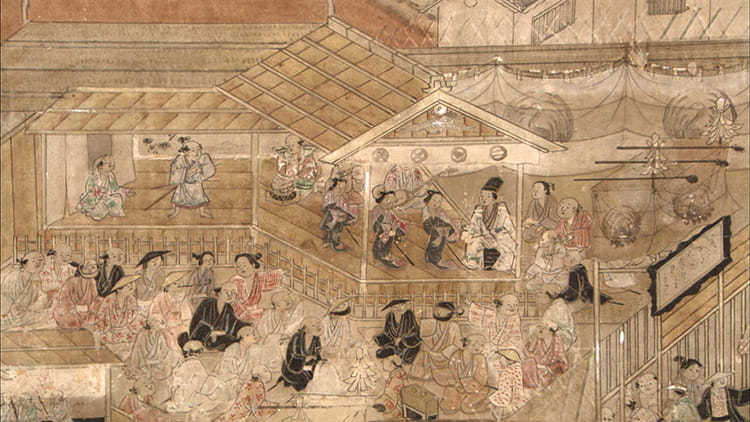
Around the eighteenth century, Kotohiragū was a popular destination for religious pilgrims from throughout Japan. Market festivals were held near the shrine three times a year, complete with temporary playhouses constructed to provide entertainment. However, in order to attract the best performers and put on productions that required complex stagecraft, a permanent stage was needed. A stage of this caliber was called an ōshibai, that is, a grand theater. There were relatively few of them throughout the country because establishing an ōshibai required official sanction by the local daimyo lord. Thankfully, the local daimyo responded favorably when the residents of Kotohira asked for permission to construct one. This was the start of Kanamaruza, which was originally known as Konpira Ōshibai.
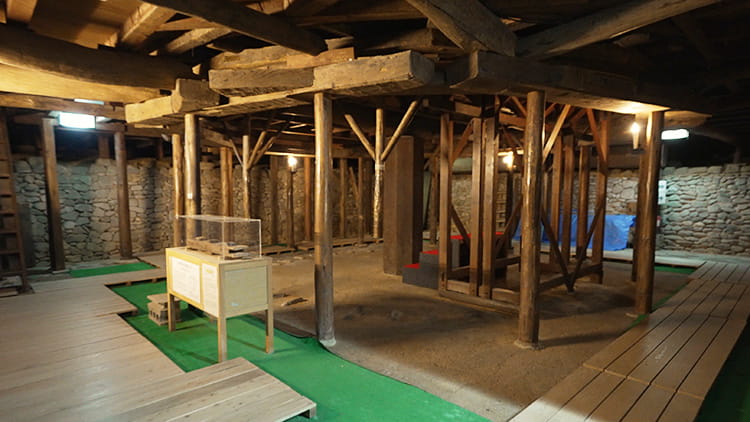
Thanks to restorations in the early 1970s and in 2003, Kanamaruza remains largely as it was in the nineteenth century. Audiences still leave their shoes at the entrance before heading to box seats or joining the crowd on a sloped tatami floor. Visitors can see these spaces, as well as walk the stage and venture behind the scenes. This includes exploring areas like the actors’ dressing rooms, the musicians’ alcove, and the warrens beneath the stage.
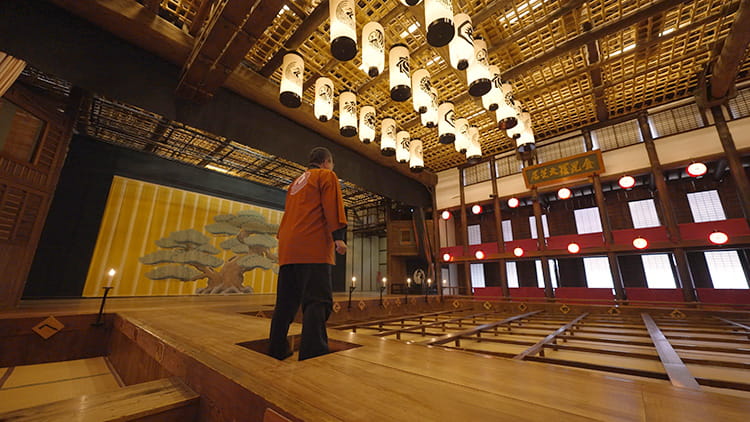
A runway known as the hanamichi passes through the seating so that actors can make dramatic entrances and exits just centimeters from the crowd. A platform in the runway lifts actors silently up to floor level, allowing characters like spirits and ninjas to appear as if by magic. Likewise, a trap-like opening downstage allows actors to disappear. The main stage has a revolving platform that rotates for scene changes and other effects. In modern theaters, features like these are motorized, but at Kanamaruza, they are still human-powered by local volunteers.
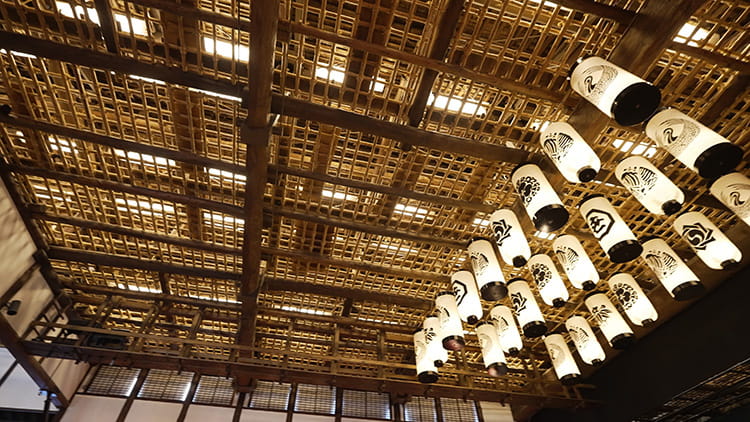
A bamboo lattice above the stage and seating area supports lanterns and backdrops. For some scenes, cut paper representing snow or cherry blossoms is scattered over the audience from this lattice. There is also a rolling track called a kakesuji, which allows actors to fly over the crowd in a harness. It is one of only a few kakesuji left in Japan.
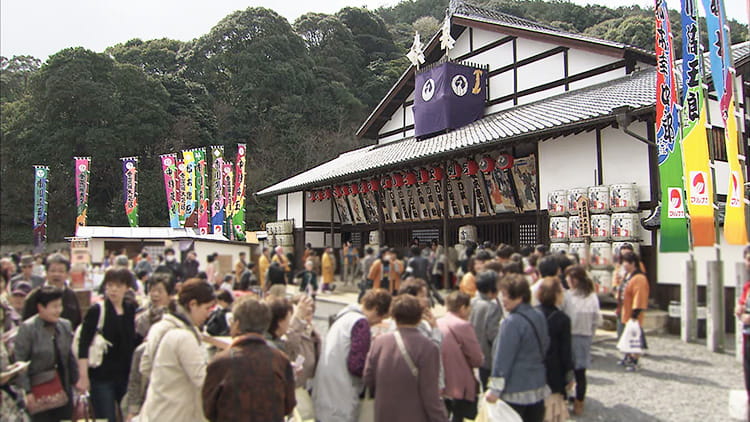
This historical venue remains a coveted stage for today’s kabuki elite, and professional performances are held every April to mark the arrival of spring. The rare chance to experience kabuki with its earliest staging methods and most famous actors makes tickets to these events a precious commodity.
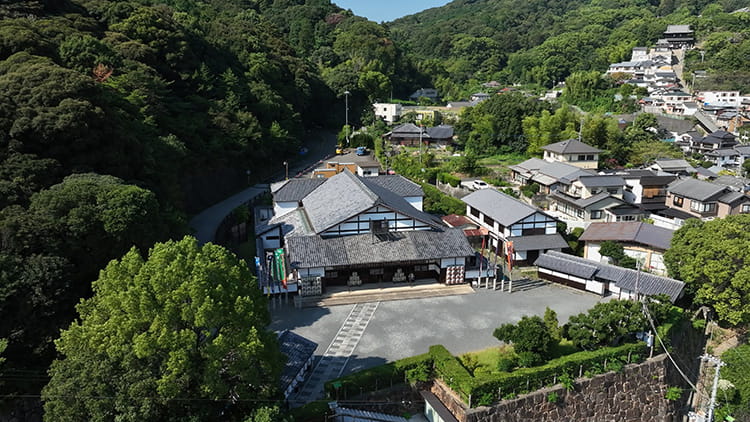
Kanamaruza offers an opportunity to experience the hidden workings of kabuki. For fans of traditional theater and fans of history alike, Kanamaruza is a beloved piece of Kotohira’s cultural heritage.
Links


令和7年度文化財多言語解説整備事業