


Oku Shoin
The Home of Private Treasures
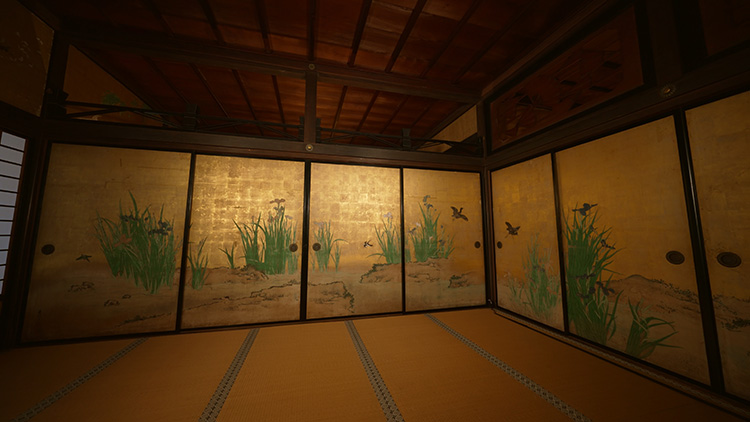
Kagawa Prefecture’s Kotohiragū Shrine is home to great works by master artists and craftspeople. Among these many exceptional art pieces, the treasures of a hall called Oku Shoin are only displayed on special occasions. Nearly all the walls and doors of its chambers are covered with elaborate paintings.
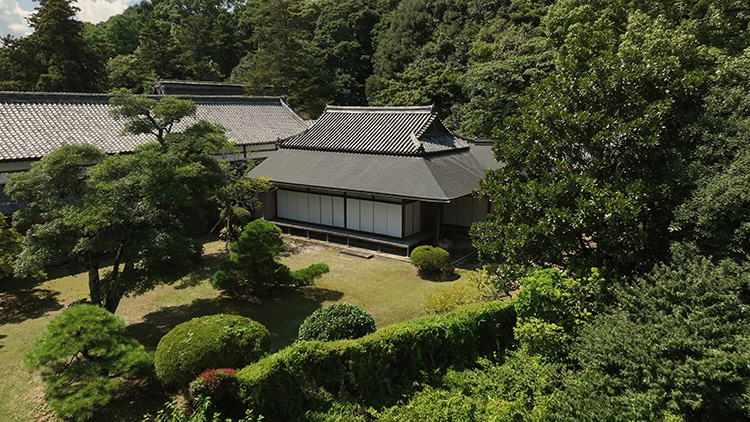
Built around 1659, Oku Shoin was originally the living quarters of the head priests. It is a smaller, more intimate space than the neighboring Omote Shoin hall, where guests from commoners to high-ranking samurai were received. Personal friends of the priests, however, were received at Oku Shoin.
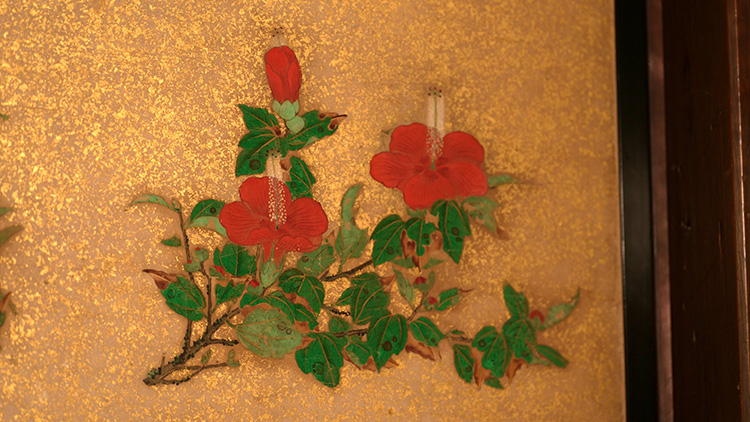
The most famous space in Oku Shoin is the Dais Room, which is adorned with the work of eighteenth-century master painter Itō Jakuchū. This art piece is titled A Hundred Flowering Plants. It encompasses 201 vivid illustrations of flowers in bloom, including hydrangeas, lotuses, peonies, and chrysanthemums. It even includes plants that were uncommon in Jakuchū’s native Kyoto, like hibiscus. These flowers were originally painted against a stark white background, but the white space was later coated in shimmering gold dust.
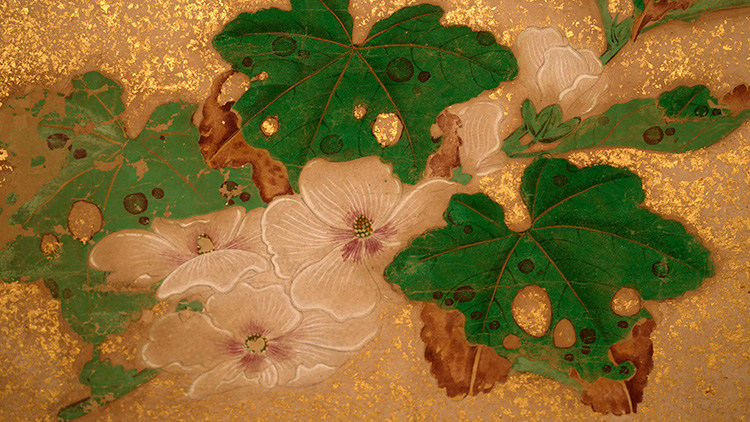
Jakuchū was known for his careful observation of the subjects he painted. Close inspection of his flowers reveals true-to-nature imperfections, such as withering leaves and holes left by hungry insects.
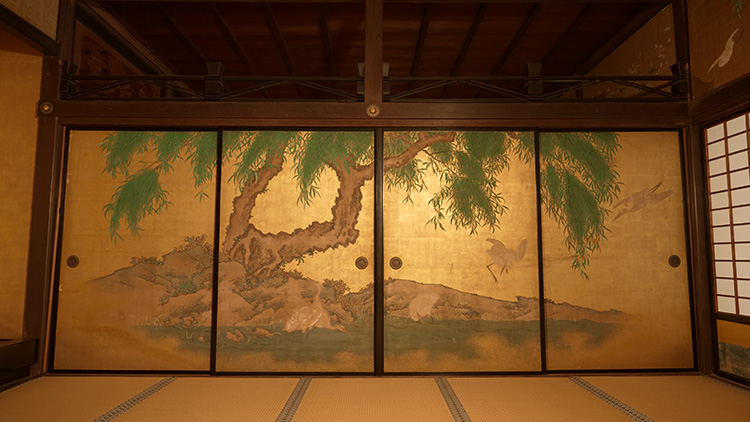
Two rooms on the eastern side of Oku Shoin feature idyllic waterside scenes. These were painted by the early nineteenth-century artist Gantai, who was known for his paintings of birds and other animals. In one room, Willow Trees and White Herons at the Waterside depicts herons taking flight, soaring past the leaves of a weeping willow, and gliding to rest in the shallows.
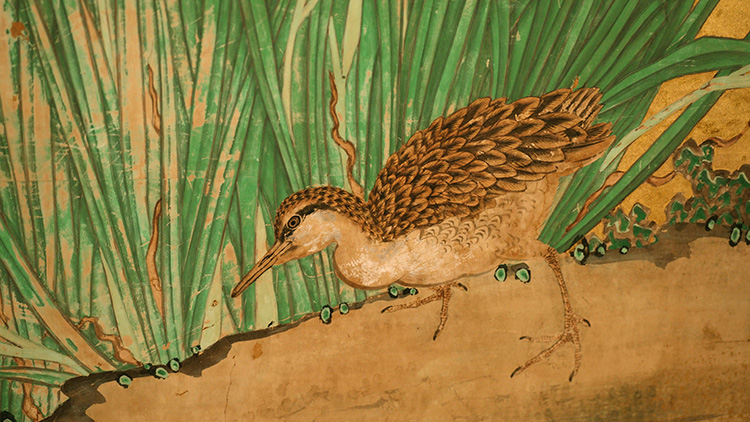
The neighboring room is decorated by Gantai’s Flowers and Birds at the Waterside. In it, water irises and lively waterfowl populate a colorful midsummer scene. A kingfisher dives toward the water, intent on its prey, while a sandpiper struts along the mossy ground. Other birds waddle or flit about, giving the scene a sense of dynamic movement.
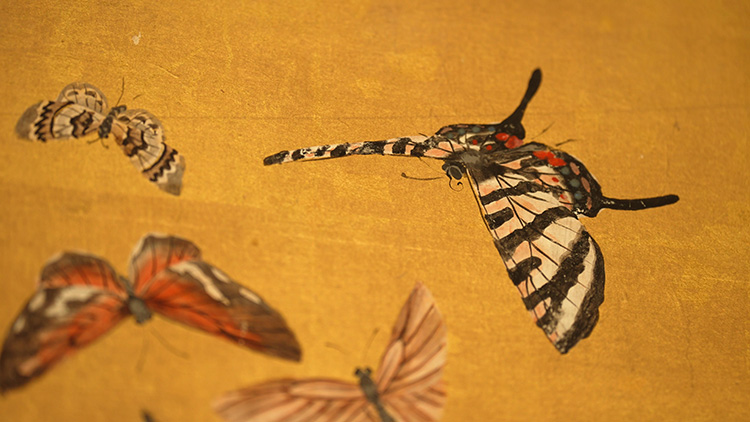
Four upper panels in the same room are covered by a flock of over 400 butterflies depicted in minute detail. Gantai is thought to have based these butterflies on specimens collected by a local naturalist. In the painting they appear animated, flying in a swarm toward the real-life garden that overlooks the plains and mountains below.
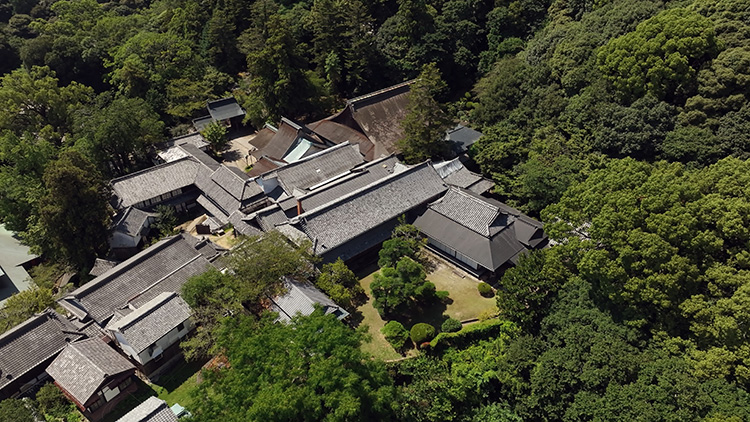
Oku Shoin was designated an Important Cultural Property of Japan in 1955. Between the natural scenes captured in its paintings and the scenery outside its walls, Oku Shoin is one of Kotohiragū’s treasure troves of beauty.
Links


令和7年度文化財多言語解説整備事業