


Omote Shoin
A Hall Filled with Masterpieces
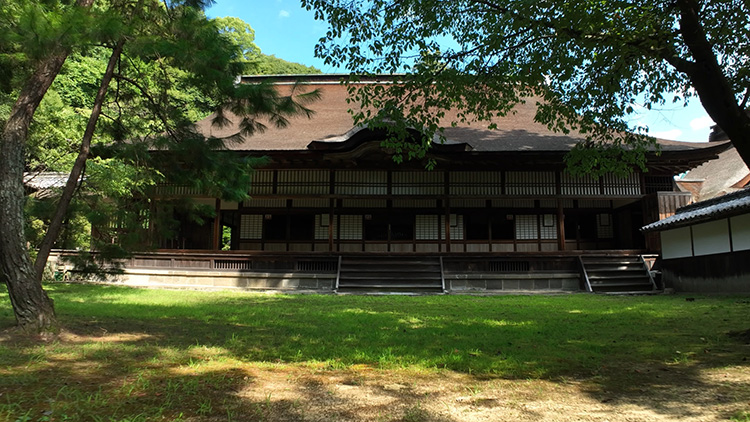
Omote Shoin is a reception hall on the grounds of Kotohiragū Shrine, in Kagawa Prefecture. In the past, visitors waited here for audiences with the head priest. The wait was made pleasant with immersive works of art made by master painters of the day. Omote Shoin is now open to the public, and the art can be admired in combination with the architecture and natural surroundings.
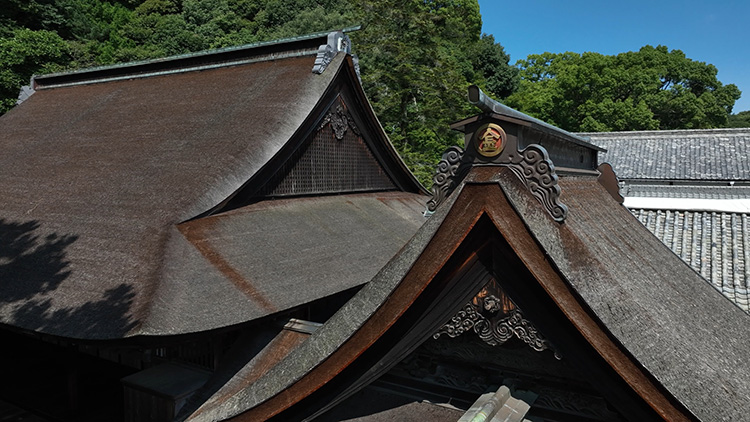
Omote Shoin was built around 1659. The building features a hip-and-gable roof with steep slopes shingled in cypress bark, which is a common feature of traditional Japanese architecture. Inside, seven rooms are divided by sliding panels. Each room can be closed, surrounding a visitor with art, or opened to include garden scenery in the viewing experience.
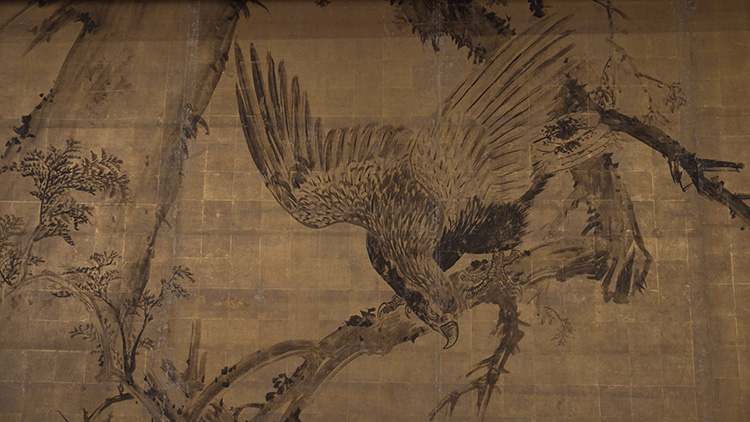
The vestibule is dominated by a painting of an eagle perched in a cypress tree, wings spread as if ready to swoop down on its prey. This dynamic composition by Mori Kansai was painted with ink on gold leaf. He used a style and subject matter similar to that of his predecessor, Maruyama Ōkyo, who painted the following five rooms.
In the eighteenth century, Japanese art was usually stylized with standard forms and symbolic imagery. However, Ōkyo pioneered a graceful, realistic style inspired by his direct observation of nature. His paintings at Omote Shoin are designated Important Cultural Assets of Japan.
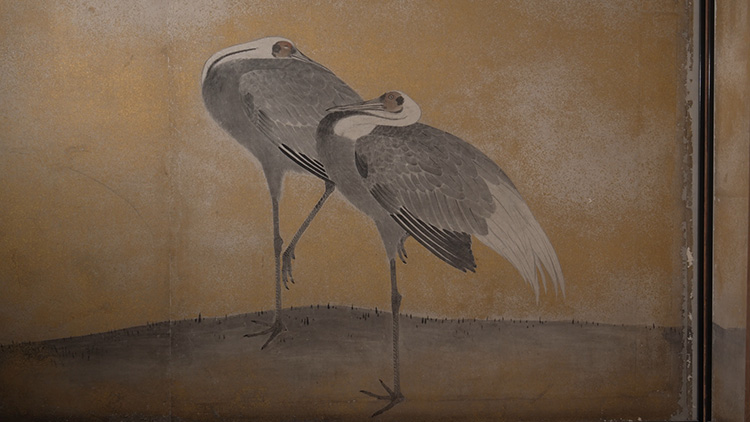
In the Crane Room, Ōkyo painted cranes wading, flying, and sleeping. A close look reveals they are different native species, all depicted with the accuracy of a naturalist.
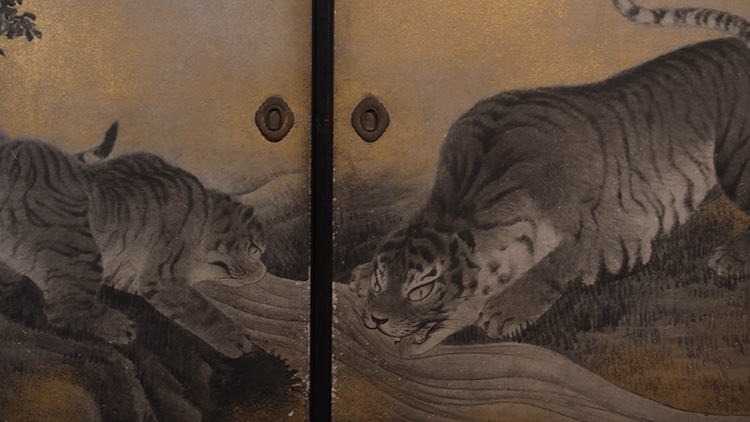
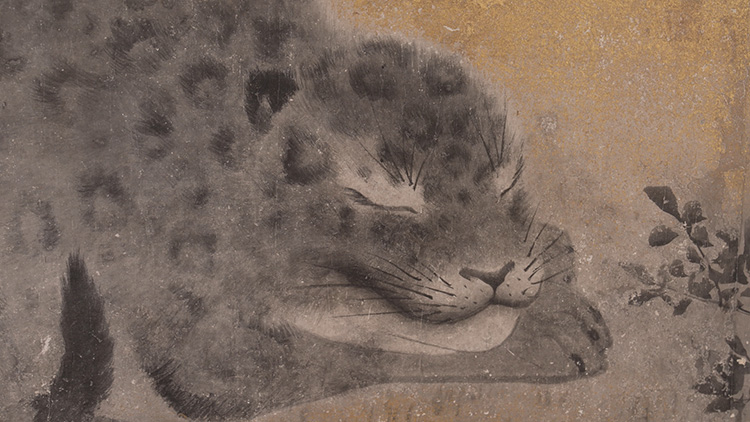
In the next room, tigers prowl the walls. Tigers are not native to Japan, and in Ōkyo’s time, there were no live specimens in the country. He therefore based his paintings on preserved hides and a readily available cousin: the housecat.
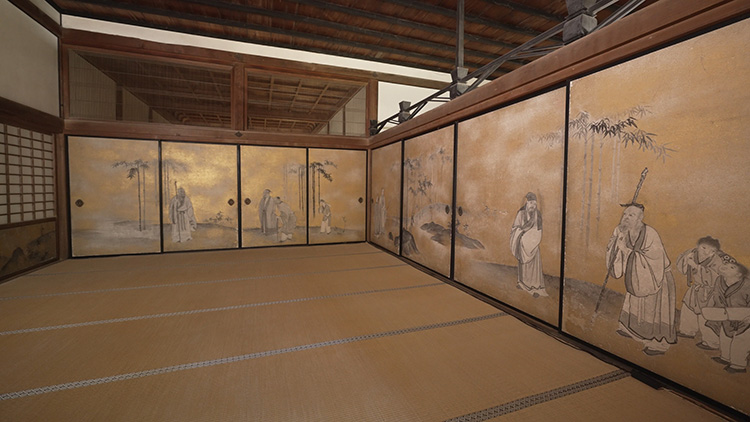
In the Room of the Seven Wise Men, Chinese sages are depicted making art and engaging in philosophical discussion. Heavier and lighter use of ink in the bamboo grove creates the illusion of depth. This effect places the viewer at the center of the grove, as though included in conversation with the sages.
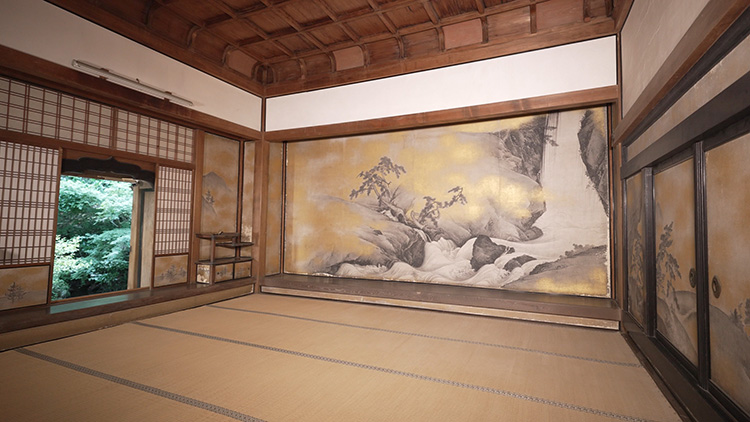
The Mountain Scenery Room has a raised seating platform where only the highest-ranking guests could sit. The mural captures the violent splashing of a waterfall, and it is one of Ōkyo’s most masterful works. The stream depicted on the walls appears to flow seamlessly into the pond in the garden outside.
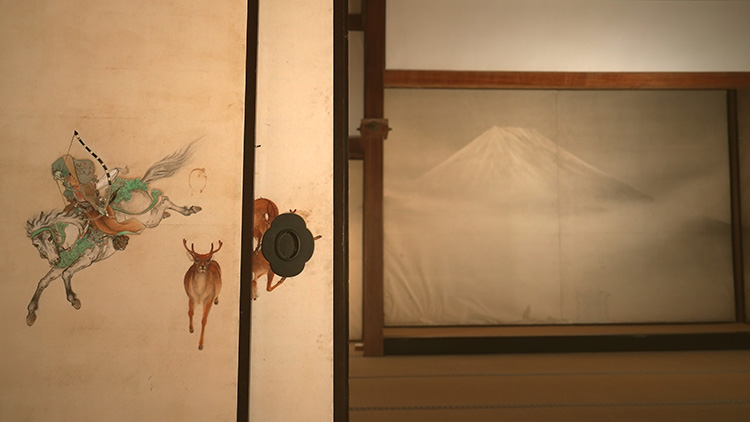
Two rooms with paintings by Murata Tanryō create a similar immersive effect. When the screens between these rooms are opened, a scene of warriors on horseback in one room and a foggy landscape of Mt. Fuji in the other combine to depict a hunting party in the foothills.
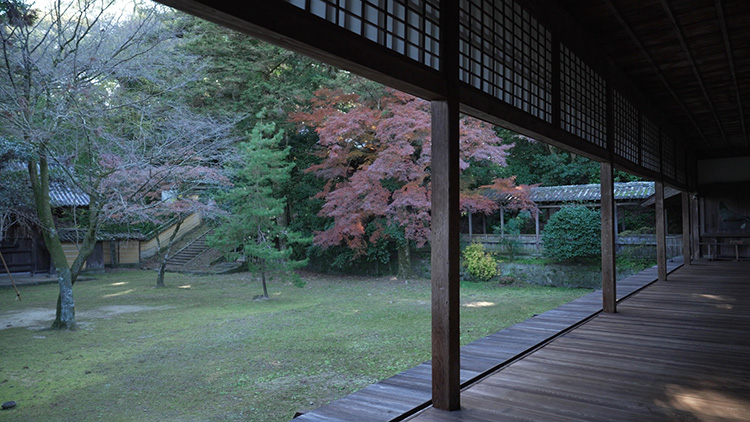
The art of Omote Shoin remains as it was during the days of the samurai. It is worked into the building and scenery, not isolated behind glass in a museum. Each chamber is not just viewed but experienced, inseparable from the gentle breeze and the sounds of water, wind, and creaking floorboards.
Links


令和7年度文化財多言語解説整備事業